

Heart of the forest:
a one-day nature tour in the Snežnik forest
Guided by: Paul Veenvliet, Licensed Guide and Biologist
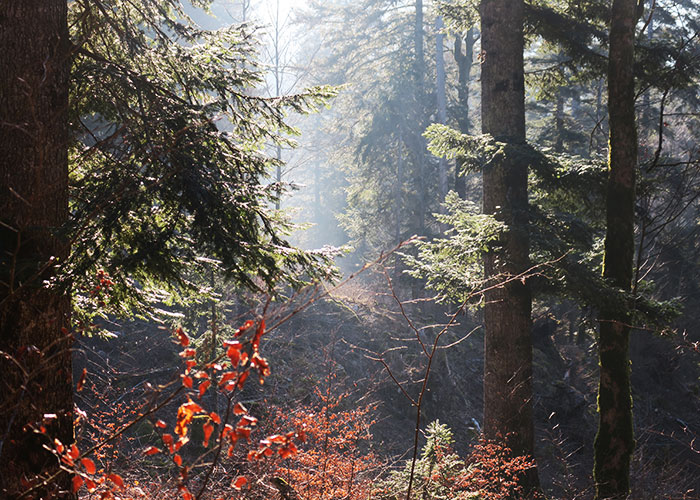
Green, mysterious, vast and silent: that is how I describe the largest forest in central Europe. It is also the home of wild animals, who’s tracks and traces we look for during this excursion. This excursion is a combination of several hikes in different parts of the same forest, and, at one place, we even go under the ground.
We start in the beautiful Snežnik castle park, which is situated in the forest edge. The castle itself has played a crucial role in the development of Slovene forestry, because the first forestry school was been established here. From here, we drive to our next excursion point.
While a car is convenient to connect the different excursion points, we can only get to know the forest while we are outside. The next point is therefore a hike over the forest roads, in a place which I call the “owl corner”, because it is home to a pair of Ural owls. They are pretty elusive and even when I go on my own, and I am absolutely silent, I see them only once in five times. A key feature is a small and somewhat muddy logging track where pools of rainwater remain. These pools are a life-line for the animals of the forest, which has virtually no natural surface water. Around the pools, we can often find footprints of deer and even bears!
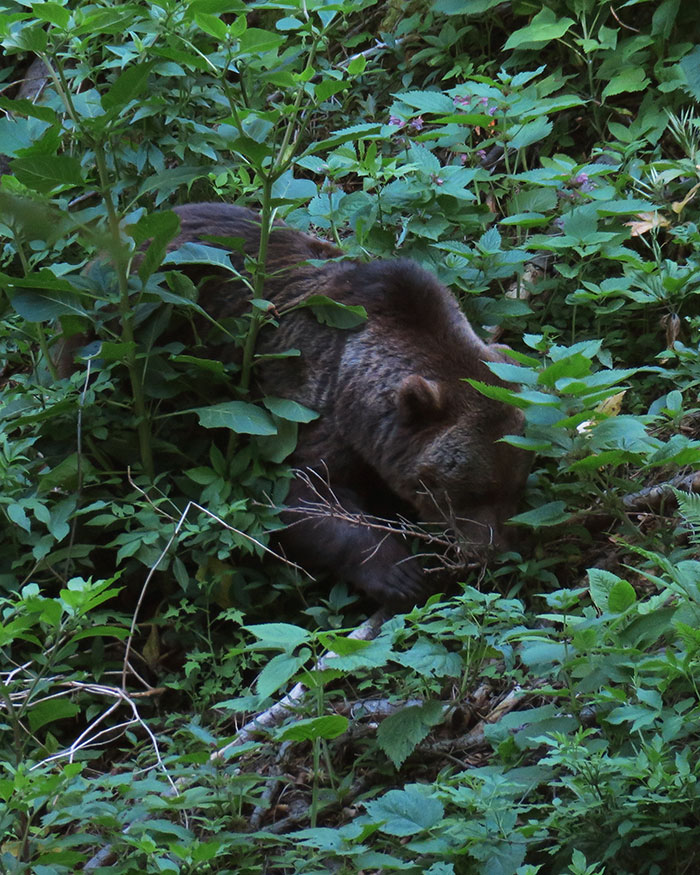
Quietly and very warily, a brown bear searches for food in the forest. During my excursions, it is rare to actually see bears, even though they are certainly nearby. Mostly, we can find their footprints in the soil.
We drive past the badger hill (apart from the first one, I am not making these names up!) and continue over Anna’s road, where we have an incredible view of the landscape and which is a lovely place for our picnic. In 2014, the Dinaric ice-storm felled most trees in this part of the forest. Since then, a dense vegetation of saplings marks the first stages of recovery. Deer like to hide between these young trees, and they can be a few metres away before we even notice that they are there.
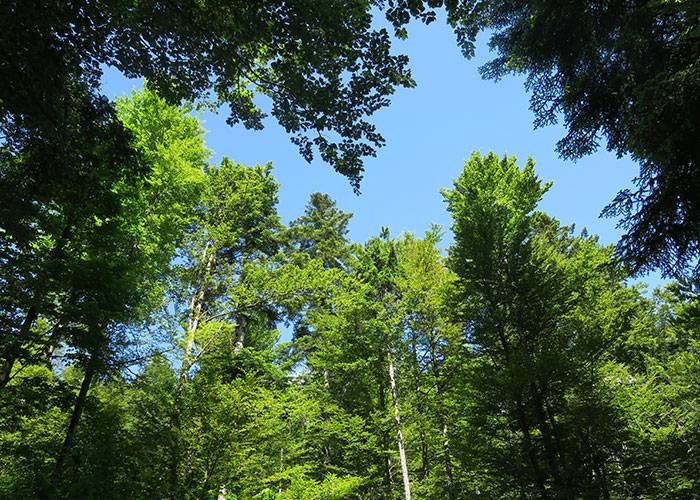
Inside the vast forest, forest reserves are established to preserve natural processes. The intention of these reserves is to exclude all human impacts, which include logging, but also the low-impact excursions like ours. However, we can walk along the edge of one of these reserves, and from the edge, we have an excellent view of the natural forest. After the Dinaric ice-storm, most fallen trees were removed for the timber industry, but in this forest reserve, they remain where they fell and are a key part of the natural forest.


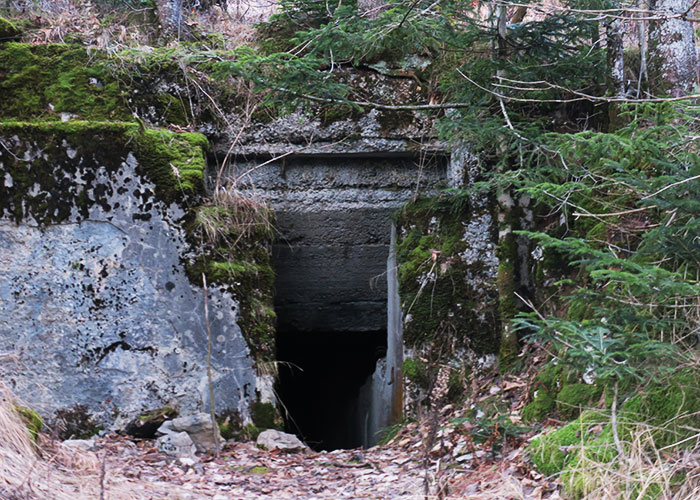
Historically, the Rapallo border between Italy and the Kingdom of Serbs, Croats and Slovenes ran straight through this area. In many places we can still find the remains of bunkers, which the Italian army build between the first and second world war. At a strategic point along the main forest road, they constructed tunnels that connect low concrete watch posts, which were hidden in the undergrowth. The tunnels are still in place, although nothing of the interior remains: they were looted around the end of the second world war. Since then, they have become the domain of cave-animals, especially cave-crickets and cave-spiders. This way, these concrete tunnels provide a unique opportunity to see something of the underground fauna: while there are many caves in the surroundings, most are inaccessible abysses.
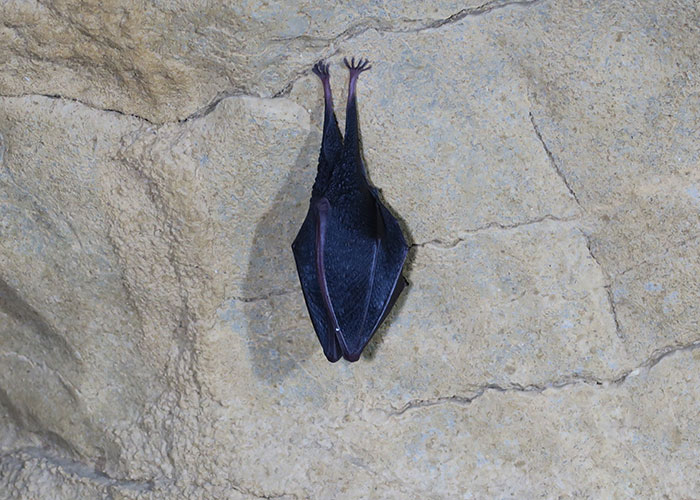
Lesser horseshoe bats visit the tunnels from time to time. Some even hibernate inside!
Our last place to visit, is called “wolf hill”. I was pretty amazed to really find many tracks and traces of the presence of wolves here: apparently, they love this particular part of the forest! Also during the excursion, we may find their footprints and droppings and I suspect that they may have a burrow nearby, where they raise their pups. I very rarely see them though, so don’t get your hopes up. We may encounter a very different animal, because Alpine salamanders also live here. These all-black relatives of the fire salamander spend much of their time in deep crevices underneath rocks but come out in damp weather.
Practical information:
What to bring:
- Comfortable hiking shoes
- Weather-appropriate clothing
- Water bottle
- Packed lunch for the picnic (if not pre-arranged)
- Photo-camera: we are in some of the most stunning parts of the Slovenian forest!
Important notes:
- Exclusively for your family or group! I do not combine groups. Small group sizes minimize disturbance to wildlife.
- Suitable for all ages and fitness levels.
- After a 5 km hike on level ground, we make several shirter hikes in other parts of the forest.
Category:
Driving by car with many stopovers and several shorter hikes in different landscapes
Meeting point:
At Snežnik castle or at the Tourist Info Centre in Stari trg
Tour duration:
9:00 – 15:00 h
Price (per person):
1 person: 115 €
2-6 persons: 80 €
Larger groups: please contact me for an offer
Children under 12 years of age are free of charge.
Picnic price (per person):
Adults: 15 €
Children under 12: 10 €
Click here for more information about the picnic.

Contact me for booking biologist.paul@gmail.com or tel ++386 41 902 110
Sharing Nature with Bears
Brown bears are making a comeback in Slovenia: from a low of about 600 in the last years of the previous century to well over 1000 at the moment of writing. In response to the population growth, bears also disperse into areas where they were not seen for decades and even centuries. For many nature-loving tourists, the prospect to share the area with bears is an exciting and positive one; some of my guests specially choose to come to Slovenia because of the bears. At the same time, brown bears are large and strong animals and confrontations are not without risks. During this hike, I will tell (and hopefully show) how to recognise the tracks and traces that bears leave in the landscape, as well as what to do, and what not to do, when you see a bear.