
Nature in Notranjska
Directly behind my house is my second home: the great Dinaric forest of the Notranjska region in Slovenia, which is part of the biggest forest in Central Europe. To me, the secluded atmosphere beneath the trees truly feels like hope, or like a mighty cathedral at times. However, I have to admit that it is not all natural. In fact, the forest exists because it is crucial to Slovenia’s economy as well. The entire landscape is shaped by the interplay between nature and human activities. Without haymaking and grazing by farm animals, meadows would soon be overgrown and cease to exist.
Every day, I go out, accompanied by my dog. I carry a photo camera as well as a monocular. A one-eyed variant of the better-known binoculars: in nature, you never know what you might see. This eternal sense of discovery is also what my guided excursions are about. Whenever possible I like to share this experience with my guests and together, we search for tracks and traces of deer and bears, and also for the many smaller animals that live here.
Over the last 25 years or so, I got to know this area pretty well. As a guide, I love to explain the processes that shape the landscape. Wherever we go, forestry, agriculture and also the management of the animal populations are consistent themes in my excursions. At the same time, the excursions are yours as well: we go at your pace because these are your holidays after all.
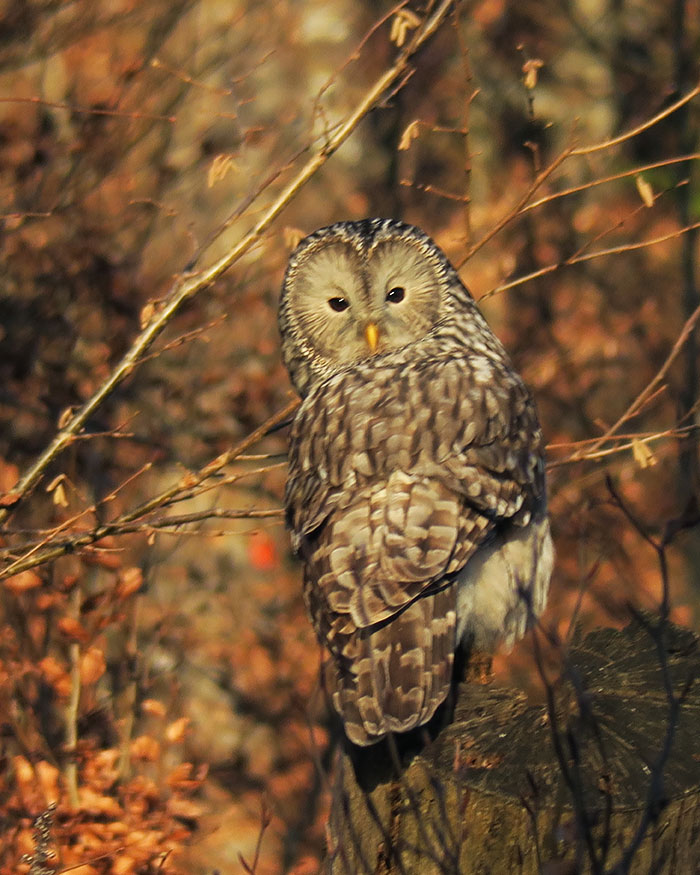
Ural owl is common in the forests of Notranjska. It is the easiest to see in late winter: February-March, but occasionally we are lucky regardless of the season.
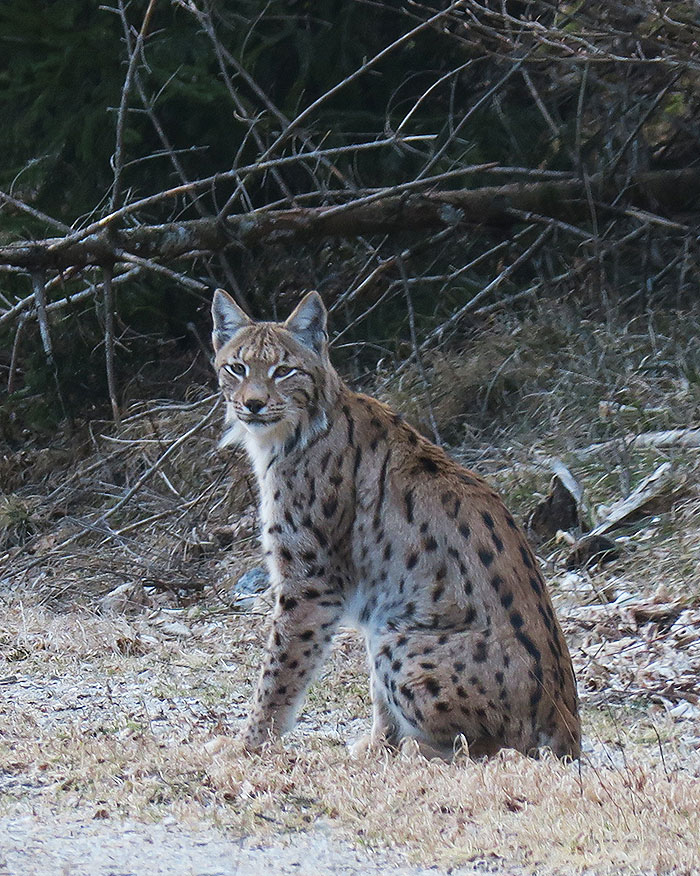
The forests of Notranjska are home to all three Central European large carnivores! You can find more information about bear, lynx and wolf in the DINA centre for large carnivores and on these websites:
Living around large carnivores
Shy and elusive: real-life encounters with lynx and wolf are rare. On most days, all I see is their footprints or occasional droppings.
With bears, this is somewhat different: not only are there many more of them (an estimated 1200 bears live in Slovenia), they can also be up and about at any time of the day. To give an estimation: I am every day in the forest, and I see bears about twice a month. These encounters are always a surprise: I never see bears twice in the same place. They are also a surprise for the bears: they don’t expect to see a human being who is quietly walking in their forest. In general, bears do their best to avoid people, so as long as you are somewhat loud, the chance to see bears is negligible. In fact, some tourist centres sell wooden flutes and I met joggers who carried a portable radio so that bears can hear them coming!
The first rule when meeting a bear is respect: they are bigger, stronger and faster than we are, and they could do some serious damage when they feel that they do not have another choice. Do not approach bears, and this especially includes also young bears: their mother never leaves them alone! The next thing to do is to tell the bear that you are there, by quietly talking: bears have poor eyesight and while they know that something is there, they might not have gotten the point that “something” is a human being. Bears really like to avoid trouble and mostly, hearing our voice is enough to make them decide to leave asap.
If the bear thinks that you are too close to avoid, she may charge. I didn’t have this while hiking, but a few times mother bears did charge my car when I drove around a corner and I was suddenly too close to them. If this happens outside of a car: try to stand your ground. Most charges are bluff: the bears just want to make sure that you don’t harm them. However, running away may trigger a bear to chase more seriously.
The biggest problems arise when bears are getting used to people: in this case we may get encounters that are too close to be healthy. We have to avoid that bears associate humans with food: never feed bears and never leave something edible in the forest.
Small species matter
While the large mammals are exiting, the small animals are just as important in nature. It is the sheer diversity of butterflies, beetles and flowers that really shows how rich this country is. There are many reasons for this. The geographical position of the country means that the Dinaric, Pannonic, Alpine, Submediterranean and north Italian biogeographical zones all come together. Each of these zones has its own, unique species of animals and plants. Add that there are large differences in altitude, from the seaside up to the highest mountains: Triglav in the Northwest has 2.864 m but the local mount Snežnik is significant as well, with 1.796 m above sea level. The limestone rocks add a whole different dimension with underground caves and rivers, in which specialized cave-animals live.
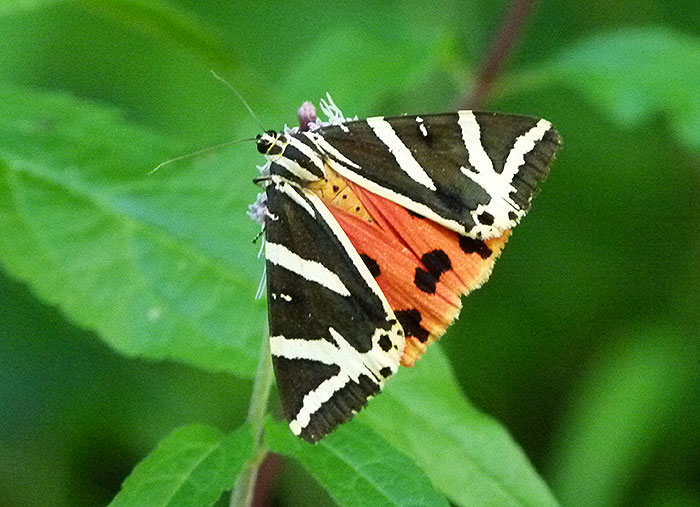
Depending on the season and location, we can often observe the small animals up close. When I stand still to look at something, it might be a bear, but it can be a tiger moth just as well.
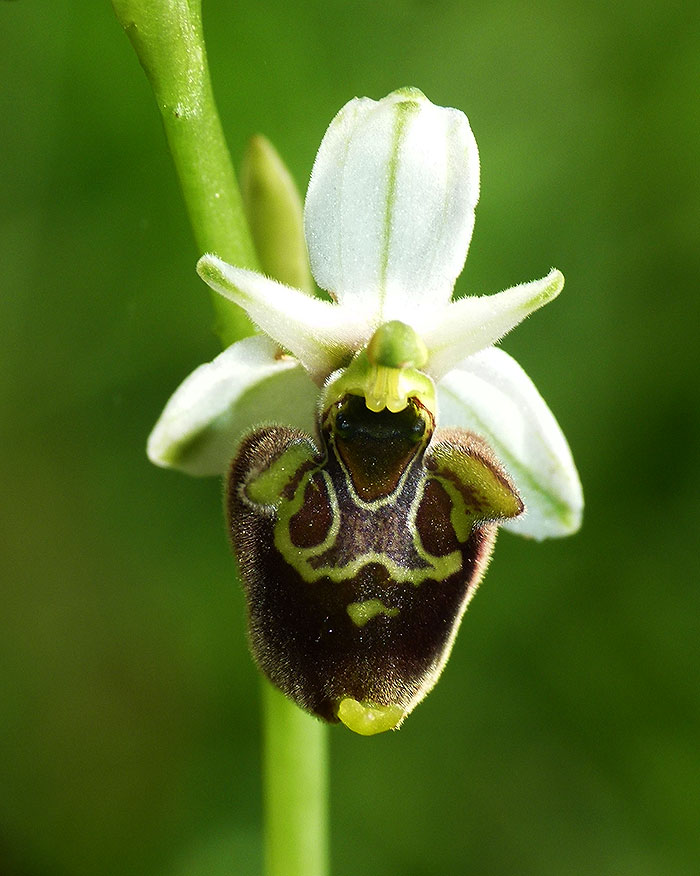
Bumblebee orchids are uncommon in Notranjska, so finding one is a highlight of any excursion! They flower in May-June which means that we will not see them later in the year. If you are especially interested in certain animals or plants, just let me know and I am happy to advise what is possible.